
The American Breakfast
Pancakes stacked high, crispy bacon, scrambled eggs, and bottomless coffee — the American breakfast is big, bold, and unapologetically indulgent.
What Makes an American Breakfast
The American breakfast is a celebration of abundance. Where the French breakfast whispers elegance and the English breakfast champions tradition, the American breakfast goes big. Tall stacks of fluffy pancakes drizzled with maple syrup, plates of crispy streaky bacon, mountains of scrambled eggs, and a never-empty cup of diner coffee — this is breakfast the American way.
The roots of the American breakfast lie in the country's pioneering spirit. Settlers and farmers needed substantial meals to fuel long days of physical work. This practical need evolved into a cultural institution, reinforced by 20th-century diners that made the big breakfast a symbol of American optimism and generosity.
Classic American Breakfast Items
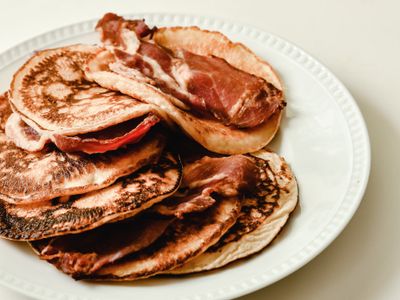
Pancakes
Fluffy stack with maple syrup and butter

Bacon & Eggs
Crispy streaky bacon with scrambled or fried eggs

Hash Browns
Crispy shredded potato patties

Waffles
Belgian-style waffles with syrup and berries

Coffee
Bottomless diner coffee — always flowing

Biscuits & Gravy
Southern staple — flaky biscuits with sausage gravy
American vs English Breakfast
American
- Sweet AND savory elements
- Pancakes, waffles, maple syrup
- Streaky bacon (thin, crispy)
- Bottomless coffee
- Hash browns (shredded potato)
- Biscuits and gravy (Southern)
English
- Entirely savory
- No pancakes or syrup
- Back bacon (thick, meaty)
- Tea with milk
- Hash browns (patties)
- Baked beans, black pudding
American vs English Breakfast: Key Differences
While both breakfasts are hearty, they differ in almost every detail. Here is a side-by-side comparison of the two traditions:
| Aspect | American | English |
|---|---|---|
| Cooking Method | Griddled and fried | Grilled and fried |
| Bacon Type | Streaky (thin, crispy) | Back bacon (thick, meaty) |
| Eggs | Scrambled or over-easy | Fried (sunny-side up preferred) |
| Bread | Toast, pancakes, or biscuits | Toast or fried bread |
| Beans | Not traditional | Baked beans essential |
| Sausage Style | Patties or links | Cumberland or Lincolnshire sausages |
| Sides | Hash browns, grits | Grilled tomatoes, mushrooms |
| Beverage | Bottomless coffee | Tea with milk |
| Sweetness Level | High (syrup, pancakes) | Low (entirely savory) |
The American Breakfast Evolution
The American breakfast has undergone a remarkable transformation over the centuries, shaped by immigration, innovation, and commercial marketing.
Colonial Era (1600s-1700s): Early American settlers ate simple, practical breakfasts — cornmeal mush, bread with butter, and cider. The colonists drew heavily on Native American foodways, incorporating corn, beans, and squash into their morning meals. Breakfast was functional fuel for a day of farming and building.
19th Century: As America expanded westward, the breakfast table grew heartier. Ranchers and railroad workers needed calorie-dense meals. Eggs, bacon, and steak became common. The Victorian influence brought elaborate breakfast spreads to wealthy households, while ordinary families stuck to simpler fare.
Early 20th Century: Two developments changed American breakfast forever. In 1894, Henry Perky invented shredded wheat, and by the 1920s, cereal had become a national obsession. Meanwhile, the diner — a uniquely American institution — began serving big breakfasts to factory workers and truck drivers. The classic diner breakfast was born.
Post-War Era (1940s-1960s): Refrigeration and mass production made bacon, eggs, and orange juice affordable for every household. TV advertising cemented the image of the all-American breakfast: pancakes, bacon, eggs, and a glass of orange juice. This was the golden age of the American breakfast.
Modern Era (1970s-present): The rise of fast-food breakfast (Egg McMuffin, 1972), the granola and health-food movement of the 1970s, the brunch culture explosion of the 2000s, and the artisanal food revolution of the 2010s have all left their mark. Today, the American breakfast is more diverse than ever.
Regional American Breakfasts
The South
The Southern breakfast is arguably America's most distinctive regional tradition. Heavily influenced by African, Scottish, and Native American cooking, it is rich, comforting, and deeply rooted in hospitality.
- Biscuits and Sausage Gravy — Flaky buttermilk biscuits smothered in creamy sausage gravy. The crown jewel of Southern breakfast.
- Grits — Ground corn porridge, served with butter, cheese, or shrimp. A Native American legacy.
- Country Ham — Salt-cured, thinly sliced ham, often served with red-eye gravy.
- Fried Green Tomatoes — Sliced unripe tomatoes, cornmeal-battered and fried until golden.
The Northeast
From New York bagels to Boston baked beans, the Northeast offers a breakfast shaped by waves of immigration and urban density.
- Bagels with Cream Cheese and Lox — A Jewish deli tradition that became New York's signature breakfast.
- Pancakes and Waffles — New England maple syrup country makes this region the spiritual home of the pancake stack.
- Diner Omelets — Loaded with ham, cheese, and peppers, these are a Northeast diner staple.
- Bodega Egg Sandwich — Fried egg, bacon, and cheese on a roll — the quintessential New York grab-and-go breakfast.
The Midwest
The heartland delivers breakfast without pretension — big portions, honest cooking, and serious comfort.
- Eggs Benedict — Said to have been invented in New York but perfected in Midwestern brunch spots.
- Corned Beef Hash — A hearty skillet classic, especially popular in Chicago and Detroit.
- Cinnamon Rolls — Giant, gooey, and often served as both breakfast and dessert.
- Country Fried Steak — Breaded beef steak with gravy, a Southern-influenced Midwestern staple.
The West Coast
Health-conscious, globally influenced, and trend-setting — the West Coast reinvents breakfast for each new generation.
- Avocado Toast — Born in Australia, perfected in Los Angeles and San Francisco. The millennial breakfast icon.
- Acai Bowls — Blended acai topped with granola, fruit, and honey. A California creation turned global phenomenon.
- Egg White Omelets — The health-conscious diner's go-to, stuffed with vegetables and served with fresh fruit.
- Artisan Coffee — The West Coast pioneered third-wave coffee culture, from pour-overs to oat milk lattes.
Can You Get an English Breakfast in America?
If you are craving a proper English breakfast on American soil, you are not out of luck — but you will need to know where to look.
Expat Pubs and British Restaurants: Most major American cities have at least one British or Irish pub that serves a weekend fry-up. Cities with large expat communities — New York, Los Angeles, Chicago, San Francisco, and Washington DC — have dedicated British establishments. These pubs typically import key ingredients like Heinz baked beans, back bacon, and proper sausages.
British Shops and Import Stores: Stores like Myers of Keswick in New York, British Isles in Houston, and various online retailers stock the essential English breakfast components. You can find Heinz beans, HP Sauce, PG Tips, back bacon, and black pudding at specialist import shops or through Amazon.
Make It Yourself: The most reliable way to get an English breakfast in America is to cook one. Back bacon (sometimes called "Irish bacon" or "Canadian bacon" in US grocery stores) is increasingly available. Heinz baked beans are sold in the international aisle of most supermarkets. With a grill pan and a few key ingredients, you can produce a convincing fry-up anywhere in America.
Frequently Asked Questions
What is a typical American breakfast?
A classic American breakfast includes pancakes or waffles with maple syrup, crispy bacon or sausage, scrambled or fried eggs, hash browns, toast with butter, and bottomless coffee. Regional variations include biscuits and gravy in the South and bagels in New York.
How is American breakfast different from English?
American breakfast features sweeter items (pancakes, waffles, maple syrup), uses streaky bacon instead of back bacon, and coffee instead of tea. The English breakfast is entirely savory with baked beans, grilled tomatoes, and black pudding — items rarely seen in America.
Why do Americans eat such big breakfasts?
The tradition of a large American breakfast dates back to pioneer days when a heavy meal was needed for physical labor. This was reinforced by 20th-century cereal marketing and the rise of diner culture, which made big breakfasts a cultural institution.
What is a Southern American breakfast?
Southern breakfast features biscuits and sausage gravy, grits (ground corn porridge), fried green tomatoes, country ham, and sweet tea. It is one of the most distinctive regional breakfast traditions in America.
Do Americans eat breakfast every day?
In practice, many Americans have a quick weekday breakfast (cereal, toast, or a granola bar) and save the full breakfast experience for weekends. The big pancake-and-bacon breakfast is more of a weekend or restaurant tradition.