
The Japanese Breakfast (朝食 Asagohan)
Balanced, beautiful, and deeply nourishing — the Japanese breakfast is considered one of the healthiest morning meals in the world.
What Is a Japanese Breakfast?
The Japanese breakfast, or asagohan (朝ごはん, literally "morning rice"), is a masterclass in nutritional balance. Where the English breakfast piles everything on one plate and the French keeps it simple with pastries, the Japanese breakfast is a carefully composed arrangement of rice, soup, protein, and vegetables — each element playing a specific role.
The foundation is always gohan (steamed rice) accompanied by miso soup. From there, the meal includes a protein (grilled fish or tamagoyaki omelet), pickled vegetables for digestion, and nori (seaweed) for minerals. Green tea completes the meal. Every component is there for a reason.
What makes the Japanese breakfast remarkable is its balance of flavors and textures: the neutral comfort of rice, the umami depth of miso, the savory richness of fish, the bright acidity of pickles, and the earthy warmth of green tea. It is a complete sensory experience.
The Japanese Breakfast Philosophy
The Japanese breakfast follows the principle of ichiju sansai (一汁三菜) — literally "one soup, three sides." This is the foundational formula of Japanese cuisine, applied not just to breakfast but to lunch and dinner as well. The soup is miso, and the three sides typically include rice, a protein (fish or eggs), and pickled vegetables.
What makes this philosophy so effective is its insistence on balance of flavours and textures. Each element contributes something different: rice provides neutral carbohydrate comfort, miso delivers deep umami, fish adds savoury richness, pickles bring acidity and crunch, and seaweed contributes minerals and an oceanic saltiness. Nothing is redundant.
The result is a meal of remarkable nutritional completeness. Complex carbohydrates, lean protein, fermented probiotics, vitamins, minerals, and antioxidants — all in one modest-looking meal. It is no coincidence that Japan consistently ranks among the healthiest nations on earth, with one of the highest life expectancies in the world.
Component by Component
Each element of the Japanese breakfast has been refined over centuries. Here is what goes on the table:
Gohan (Steamed Rice)
Short-grain white rice, cooked to a slightly sticky perfection in a rice cooker or donabe (clay pot). It is the anchor of the meal — everything else is a companion to the rice. Some families mix in a little barley (mugimeshi) for extra fibre.
Miso Shiru (Miso Soup)
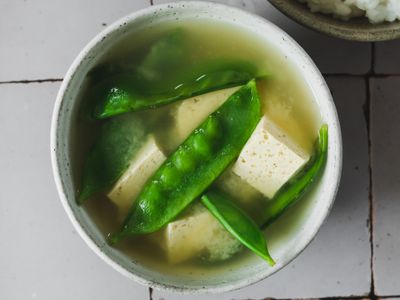
A warm, savoury soup made from dashi (stock) and miso paste (fermented soybeans). Typical additions include cubed tofu, wakame seaweed, and negi (spring onion). The soup is served steaming hot and sipped directly from the bowl.
Tamagoyaki (Rolled Omelette)
A rectangular rolled omelette cooked in a special makiyakinabe pan. It is seasoned with dashi, sugar, and soy sauce, giving it a slightly sweet, savoury flavour and a silky, layered texture. Sliced into bite-sized pieces, it provides satisfying protein.
Tsukemono (Pickled Vegetables)
Japanese pickles are nothing like Western ones. Common varieties include takuan (daikon radish pickled in rice bran), umeboshi (sour pickled plum), and kyurizuke (cucumber). They cleanse the palate, aid digestion, and add bright, acidic contrast.
Nori (Dried Seaweed)
Thin sheets of roasted seaweed, typically eaten by wrapping around a small clump of rice dipped in soy sauce. Nori provides iodine, minerals, and a satisfying crispy texture. High-quality nori has a glossy sheen and a complex, oceanic flavour.
Natto (Fermented Soybeans)
Perhaps the most polarising Japanese food. Natto has a distinctive sticky, stringy texture and a strong, earthy aroma. It is packed with protein, vitamin K2, and probiotics. Mixed with soy sauce, mustard, and chopped spring onions, then poured over rice — it is an acquired taste worth acquiring.
Grilled Fish (Salmon or Mackerel)
A fillet of salmon (sake) or mackerel (saba), simply grilled with a pinch of salt. The skin crisps up beautifully while the flesh stays moist and flaky. This is the primary protein source in a Japanese breakfast, providing omega-3 fatty acids, vitamin D, and high-quality protein with minimal fat.
Japanese vs English Breakfast
| Aspect | Japanese Breakfast | English Breakfast |
|---|---|---|
| Temperature | Warm (steamed, grilled) | Hot (fried, grilled) |
| Protein Source | Fish, eggs, soybeans | Bacon, sausage, eggs |
| Carb Base | Steamed rice | Toast, fried bread |
| Fermented Foods | Miso, natto, tsukemono | None typically |
| Fat Content | Very low | High |
| Primary Drink | Green tea (sencha) | Black tea with milk |
| Calories | 400-600 kcal | 1,200-1,700 kcal |
Health Comparison
| Nutrient | Japanese Breakfast | English Breakfast |
|---|---|---|
| Calories | 400-600 kcal | 1,200-1,700 kcal |
| Total Fat | 8-12 g | 60-90 g |
| Sodium | 1,200-1,800 mg | 1,500-2,500 mg |
| Fibre | 6-10 g | 4-6 g |
| Vitamins | B12, D, K2, A, C | B12, D, A, Iron |
| Protein | 20-30 g | 40-60 g |
| Probiotics | Yes (miso, natto) | No |
How to Make a Japanese Breakfast at Home
You do not need to live in Tokyo to enjoy a traditional Japanese breakfast. Here is a simplified approach that can be ready in under 30 minutes:
- Start the rice cooker — this takes the longest. Use short-grain Japanese rice, rinse it well, and set it cooking first thing.
- Make miso soup — dissolve dashi powder in boiling water, add cubed tofu and wakame, then stir in miso paste off the heat (boiling kills the beneficial probiotics).
- Grill the fish — season a salmon fillet with salt and grill under a hot broiler for 6-8 minutes until the skin is crispy.
- Prepare the sides — slice some shop-bought tsukemono, toast a sheet of nori over a flame, and boil an egg or make tamagoyaki if you have the pan.
- Brew green tea — sencha is the standard. Use water at 70-80°C (not boiling) for the best flavour.
Tip: Many of these components can be prepared in advance. Cook extra rice the night before, keep tsukemono in the fridge, and use instant miso soup packets for the quickest version.
Traditional Japanese Breakfast Items
Gohan (Rice)
Steamed white rice — the foundation of every Japanese meal
Miso Soup
Fermented soybean soup with tofu and seaweed

Grilled Fish
Salmon or mackerel, simply grilled

Tamagoyaki
Sweet rolled omelet — a Japanese breakfast staple

Tsukemono
Pickled vegetables for contrast and digestion

Green Tea
Sencha or matcha — always served with breakfast
Health Benefits
Nutritionists consistently rank the Japanese breakfast among the healthiest in the world. It provides a balance of complex carbohydrates (rice), complete protein (fish, eggs), probiotics (miso, pickles), and antioxidants (green tea). The typical calorie count is 400-600 — a fraction of the English breakfast's 1,200+.
The inclusion of fermented foods (miso, natto, tsukemono) supports gut health, while the low-fat cooking methods (grilling, steaming) keep the meal light. Japan has one of the highest life expectancies in the world, and many researchers point to the traditional diet — including breakfast — as a contributing factor.
Frequently Asked Questions
What is a traditional Japanese breakfast?
A traditional Japanese breakfast (asagohan) consists of steamed rice, miso soup, grilled fish, tamagoyaki (rolled omelet), pickled vegetables, nori (seaweed), and green tea. It is nutritionally balanced and considered one of the healthiest breakfast traditions.
Is Japanese breakfast healthier than English breakfast?
Yes, Japanese breakfast is significantly lower in calories, fat, and sodium. It is rich in protein, fermented foods, and vegetables. However, it is also higher in sodium from soy sauce and miso. Both have nutritional strengths.
Do Japanese people eat this every day?
Many Japanese people, especially older generations, still eat a traditional breakfast daily. Younger people increasingly opt for Western-style breakfasts (toast, cereal) on weekdays but may have traditional breakfast on weekends.
What is natto and why is it eaten for breakfast?
Natto is fermented soybeans with a distinctive sticky texture and strong flavor. It is rich in protein, vitamins, and probiotics. It is a traditional breakfast food, often eaten over rice with soy sauce and mustard.
Can I make a Japanese breakfast at home?
Absolutely. The key components are rice (use a rice cooker), miso soup (instant packets work), grilled fish (salmon fillets), and pickled vegetables. You can prepare most elements in advance for a quick assembly.