
The Turkish Breakfast (Kahvaltı)
The world's most varied breakfast tradition — a feast of small plates, shared with family and friends, that turns the morning meal into a celebration.
What Is Kahvaltı?
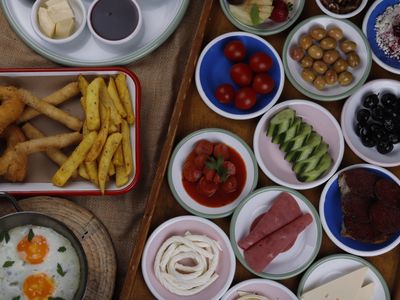
The Turkish word kahvaltı literally means "before coffee" (kahve = coffee, altı = under/before), though tea is actually the drink of choice at Turkish breakfast. It is one of the most generous and varied breakfast traditions in the world, typically featuring 10-20 different small dishes arranged across the table.
In Turkey, breakfast is not merely sustenance — it is a social ritual. Weekend breakfasts can last for hours, with dishes continuously replenished and conversation flowing freely. The more items on the table, the more generous the host. Turkish hospitality demands that no guest leaves the breakfast table hungry.
Unlike the English breakfast, which is served on a single plate, the Turkish breakfast is a communal experience. Everyone shares from the same dishes, tearing bread with their hands and sampling different combinations. It is messy, joyful, and deeply satisfying.
Kahvaltı: The World's Most Generous Breakfast
If there were a world championship for breakfast variety, Turkey would win uncontested. A typical Turkish breakfast table holds between 10 and 20 different dishes — and that is a modest weekday spread. On weekends and special occasions, the number can climb to 30 or more.
What makes Turkish breakfast extraordinary is not just the quantity but the range of flavours and textures: salty cheese, briny olives, sweet honey, creamy kaymak, crusty bread, juicy tomatoes, crisp cucumbers, savoury eggs, and spicy sausage — all on the same table, all at the same time. Every bite is a different combination. No two mouthfuls need be the same.
The abundance is deliberate. In Turkish culture, a bare breakfast table is a failure of hospitality. The host's honour is measured by the generosity of the spread, and a proper kahvaltı should leave guests impressed, full, and already planning their next visit.
Component by Component
Every Turkish breakfast table features these essential components, each one non-negotiable:
Simit (Sesame Bread)
The circular bread ring coated in toasted sesame seeds is Turkey's most iconic street food and a breakfast essential. Crispy on the outside, chewy within, simit is torn apart and used to scoop up cheese, eggs, and everything else on the table. Sold by street vendors everywhere, often from red pushcarts.
Beyaz Peynir (White Cheese)
A brined sheep or cow's milk cheese similar to feta but milder and creamier. It is present at every single Turkish breakfast without exception. Served in thick slabs, it is eaten with bread, olives, and tomatoes. The quality of a household's beyaz peynir is a point of pride.
Zeytin (Olives)
Both black and green olives appear on the Turkish breakfast table, often marinated in olive oil with herbs and lemon. Turkey is one of the world's largest olive producers, and the quality shows. Olives provide the briny, salty counterpoint to the sweeter elements like honey and jam.
Domates & Salatalık (Tomatoes & Cucumbers)
Sliced ripe tomatoes and crisp cucumbers are the fresh element of Turkish breakfast. Often drizzled with olive oil and sprinkled with salt and dried mint, they provide a cool, hydrating crunch that balances the richer components. In summer, they are at their sweetest and most essential.
Bal & Kaymak (Honey & Clotted Cream)
The sweet highlight of Turkish breakfast: a pool of golden honey beside a generous dollop of thick, rich kaymak (clotted cream). Eaten together on fresh bread, this combination is pure indulgence. Turkey produces exceptional wildflower and pine honey, and kaymak is made from water buffalo milk in the best versions.
Yumurta (Eggs — Often Menemen)
Eggs feature prominently in Turkish breakfast, most commonly as menemen — scrambled with tomatoes and peppers — or fried with sucuk (spicy beef sausage). Hard-boiled eggs are also common, served whole for peeling at the table.
Çay (Black Tea in Tulip Glasses)
Turkish breakfast runs on çay — strong black tea brewed in a double-stacked teapot (çaydanlık) and served in delicate tulip-shaped glasses. The tea is never drunk alone; it flows continuously throughout the meal. A single breakfast might involve six or more glasses. Sugar cubes are offered, never milk.
Sucuk (Spicy Beef Sausage)
A dry, fermented sausage seasoned with garlic, cumin, and pul biber (Aleppo pepper). At breakfast, sucuk is sliced into coins and pan-fried until crispy, often alongside eggs. The rendered spicy fat flavours everything it touches. It is addictive, bold, and unmistakably Turkish.
Menemen: The Turkish Scramble
If the English breakfast has fried eggs, the Turkish breakfast has menemen — and it deserves its own section. This iconic dish is a simple but magnificent combination of eggs scrambled with diced tomatoes, green peppers, onions, and a generous pinch of pul biber (Turkish red pepper flakes).
Menemen is cooked slowly in olive oil, allowing the tomatoes to break down into a rich sauce before the eggs are added. The eggs should be soft and creamy, never dry — there is an art to getting the consistency just right. It is traditionally served in the pan it was cooked in, placed directly on the table while still bubbling.
Everyone tears off pieces of fresh bread and dips directly into the shared pan. There is no polite way to eat menemen — it demands enthusiasm. The combination of sweet tomatoes, gentle heat from the peppers, rich eggs, and crusty bread is one of the great breakfast pleasures anywhere in the world.
Variations include adding sucuk (spicy sausage) or pastırma (cured beef) for a heartier version, though purists argue the vegetable-only version is the true menemen.
Turkish vs English Breakfast
| Aspect | Turkish Kahvaltı | English Breakfast |
|---|---|---|
| Serving Style | Communal, shared plates | Individual plated |
| Temperature | Mix of cold and hot | All hot |
| Number of Dishes | 10-20+ small plates | 1 large plate |
| Protein Source | Cheese, eggs, sucuk | Bacon, sausage, eggs |
| Vegetables | Fresh (tomatoes, cucumbers) | Cooked (baked beans, mushrooms) |
| Bread | Simit, fresh loaf | Toast, fried bread |
| Primary Drink | Çay (black tea) | Tea with milk |
| Sweet Element | Honey, kaymak, jam | Baked beans, toast |
Turkish Breakfast Culture
In Turkey, breakfast is not a meal — it is an event. The weekend kahvaltı is one of the most important social rituals in Turkish life. Extended families gather around a table loaded with dishes, and the meal unfolds over two, three, sometimes four hours. There is no rush. The çay keeps flowing, the conversation keeps going, and the dishes keep coming.
The concept of sharing is central. Unlike Western breakfasts where each person has their own plate, the Turkish breakfast is communal from start to finish. Bread is torn and passed. Cheese is sliced for the group. The menemen pan sits in the centre of the table for everyone to dip into. This creates a sense of togetherness that goes beyond mere eating.
Turkish hospitality dictates that a guest must never leave the table hungry, and the breakfast table is where this generosity is most visible. Even a simple weekday breakfast for one or two people will include at least eight or nine different items. For guests, the table overflows — the quality and variety of your kahvaltı is a direct reflection of how much you value your visitors.
In restaurants along the Bosphorus in Istanbul, breakfast has become an experience unto itself. Sunday morning kahvaltı spreads feature live music, waterfront views, and an almost absurd abundance of food. But the heart of Turkish breakfast culture remains the family kitchen table, where the simplest ingredients — cheese, olives, bread, and tea — are transformed into something greater than the sum of their parts by the act of sharing them together.
Classic Turkish Breakfast Items
Beyaz Peynir
White cheese — the foundation of every Turkish breakfast
Zeytin (Olives)
Black and green olives, always present

Bal & Kaymak
Honey with clotted cream — pure indulgence

Simit
Sesame-crusted bread ring — Turkey's iconic pastry

Menemen
Scrambled eggs with tomatoes, peppers, and spices

Çay (Tea)
Turkish black tea served in tulip-shaped glasses
The Van Breakfast
The city of Van in eastern Turkey is legendary for its breakfast culture. A traditional Van breakfast features over 30 different items including local herb cheeses (otlu peynir), murtuğa (a butter and egg dish), kavut (roasted grain), and dozens of seasonal items. Breakfast restaurants in Van serve thousands of people every weekend morning.
Turkish vs English Breakfast
The key differences: Turkish breakfast is communal and shared from many small plates, while the English breakfast is served on individual plates. Turkish breakfast emphasizes fresh vegetables, cheese, and bread, while the English focuses on fried meats and eggs. Both are substantial, but in completely different ways.
Frequently Asked Questions
What is a Turkish breakfast?
A Turkish breakfast (kahvaltı) is a elaborate spread of small dishes including white cheese, olives, honey with kaymak (clotted cream), fresh bread, tomatoes, cucumbers, eggs (often with sucuk sausage), jams, and endless glasses of çay (Turkish tea). It is meant to be shared.
Why is Turkish breakfast so big?
In Turkey, breakfast is a social event, not just a meal. Families and friends gather around the table for hours on weekends. The variety of dishes reflects Turkish hospitality — the more dishes on the table, the more generous the host.
What is menemen?
Menemen is a traditional Turkish dish of scrambled eggs cooked with tomatoes, green peppers, onions, and spices. It is served in the pan it is cooked in, directly at the table, and eaten with fresh bread.
Is Turkish breakfast healthy?
Turkish breakfast is one of the healthiest breakfast traditions in the world. It includes fresh vegetables, olive oil, protein from eggs and cheese, and probiotics from yogurt. The variety ensures a good balance of nutrients.
What is the best city in Turkey for breakfast?
Van, in eastern Turkey, is famous for having the best breakfast culture in the country. Van breakfast features unique local cheeses, herbs, and dozens of small dishes. Istanbul also offers incredible breakfast experiences along the Bosphorus.